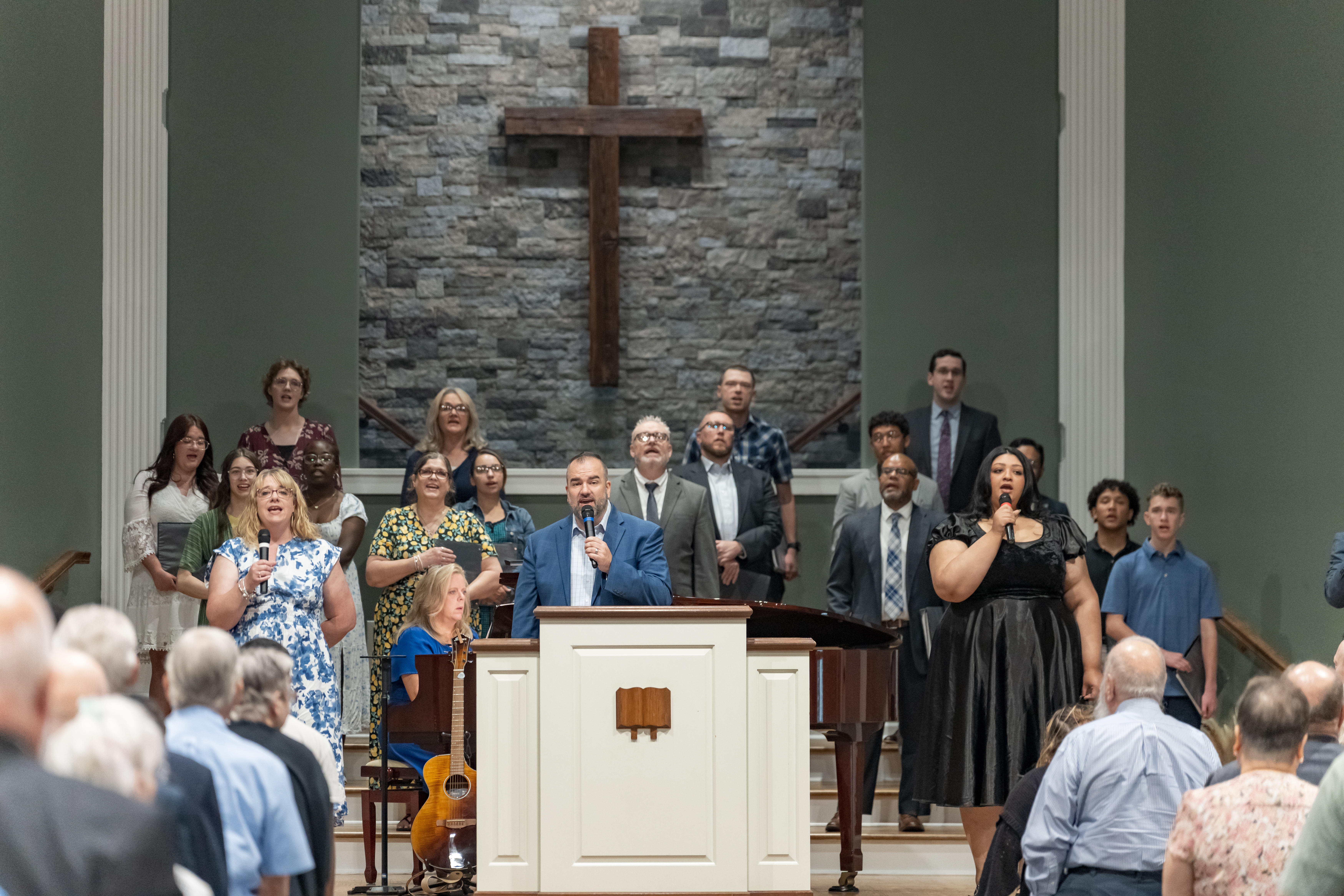
The piano is tuned, every word rehearsed, every voice ready, and still, the most important question a worship team member can ask has nothing to do with sound.
Who is this for?
Worship Is More Than Singing
When most people hear the word "worship," they think of the songs sung before the sermon. But worship is much more than that. Singing, preaching, praying, and giving are all acts of worship, and every one of them can be offered to God in sincerity, or to self in pride.
A pastor can study over a sermon to be admired for his insights rather than to feed the flock God has entrusted him with. A giver can drop an offering in the plate to be seen as generous rather than out of love for the Lord, a danger Christ addressed directly:
Matthew 6:1
Take heed that ye do not your alms before men, to be seen of them: otherwise ye have no reward of your Father which is in heaven.
A worshipper can lift hands or sing loudly not from a heart stirred by God, but from a desire to appear spiritual to those nearby. Wherever a person serves in worship, pulpit, platform, offering plate, or the seat, the same temptation is there: to turn an act meant for God into a performance for man.
John the Baptist stood at the peak of his ministry, with crowds gathering and people following, and said this of Christ:
John 3:30
He must increase, but I must decrease.
That single sentence defines the calling of every person who serves on a platform.
Any Ministry that puts attention on the servant instead of the Savior has already missed the point.
The Danger of a Watching Crowd
Scripture warns plainly about the pull toward performing for people rather than for God. In John 12, even some of the chief rulers believed on Christ, yet would not confess Him openly:
John 12:43
For they loved the praise of men more than the praise of God.
A worship team stands in a uniquely exposed position. There is a congregation watching, a sound system amplifying, and a camera live streaming. None of that is wrong in itself, but it creates real temptation to serve the eyes in the room rather than the throne of God. The desire to be noticed or complimented can quietly replace the desire to glorify Christ, and the shift rarely announces itself. It creeps in through small compromises, a note held for effect rather than for the Lord, a subtle seeking of praise from people that outweighs the joy of pleasing God.
The Standard Is the Heart, Not the Performance
When Samuel was sent to anoint a king, he was reminded of an unchanging truth:
1 Samuel 16:7
For the LORD seeth not as man seeth; for man looketh on the outward appearance, but the LORD looketh on the heart.
A congregation can only judge the outward appearance, tone, timing, technique. God alone judges the heart behind it. A technically flawless song offered in pride is not acceptable worship. A simple song offered in humility, aimed entirely at the glory of God, is.
Paul gives the team the standard that settles every motive question:
1 Corinthians 10:31
Whether therefore ye eat, or drink, or whatsoever ye do, do all to the glory of God.
Keeping the Spotlight Where It Belongs
Practical tips for the platform:
- Examine motive before rehearsal, not just during it. Ask privately whether preparation is aimed at excellence for God's glory or excellence for personal recognition.
- Refuse the compliment trap. Receive kind words graciously, but redirect the credit quickly and genuinely to the Lord.
- Guard against comparison. Comparing gifting, placement, or attention with other team members feeds pride and steals joy from service.
- Remember the unseen Audience. The congregation may never know the difference between worship and performance, but God always does.
David wrote plainly:
Psalm 115:1
Not unto us, O LORD, not unto us, but unto thy name give glory.
This posture David is highlighting, should be present in every faithful servant from any stage. We offer our skills without reservation, surrender the credit without exception, and Christ alone is left standing in the spotlight.