Revising our Church Constitution

Chad Braley • Senior Pastor
November 8, 2026

5 Minute Read

A church constitution is one of the foundational documents of a local church. It defines who we are, how we operate, and what we believe. It establishes the procedures by which we make decisions, care for our members, and carry out the ministry God has entrusted to us. In short, it is the governing framework that keeps us operating with integrity, clarity, and order.

At Faith Baptist Church, our constitution has served us well. But our last revision was in 2001, over two decades ago. A lot has changed in how churches operate, communicate, and serve their communities since then. As a church, we have a responsibility before God and to one another to ensure that our governing documents reflect sound practice. Periodic review is not a sign that something is broken; it is faithful stewardship of the structure God has given us.

Why Now?

This revision is not about changing what we believe. Existing sections in our Statement of Faith are not being revised, however additional sections needed to be addressed. The doctrines that define us, salvation by grace through faith, believer's baptism, the authority of Scripture, the autonomy of the local church, remain unchanged and what we are updating are the procedural elements of how we operate: the structures, processes, and language that govern the practical life of the church.

Our goal is to strengthen what is already there and bring greater clarity to how we function together as a body.

The Meeting Schedule

The meetings outlined below have been designed with one purpose in mind: to ensure that every member of Faith Baptist Church has the information and opportunity they need to participate in this process with confidence. We want no one to feel rushed, confused, or unheard. From the opening introduction through the final vote, each meeting serves a distinct purpose, building understanding, inviting dialogue, and bringing the congregation together around a shared decision. We have structured multiple Q&A sessions on varying days, because we value your questions and want to remove as many barriers to participation as possible.

Introductory Meeting

Date: Sunday, November 8, 2026
Following the evening worship service in the auditorium.

  • The floor will not be open for new questions at this meeting
  • Leadership will walk through the full update process from start to finish
  • Copies of the proposed changes will be distributed and explained
  • Guidance will be provided on how to read and interpret the revisions
  • We will review the Statement of Faith together
  • Leadership will share the history behind this process: who facilitated it and how changes were proposed and refined
Questions & Answers Meetings

Q&A Meeting 1
Date: Thursday, December 3, 2026 at 11:00 a.m.

Q&A Meeting 2
Date: Saturday, December 5, 2026 at 10:00 a.m.

Q&A Meeting 3
Date: Wednesday, December 9, 2026 at 8:30 p.m.

  • Open Q&As with a panel of our pastors and deacons
  • Bring any question you have about the document — what is in it, what changed, or why
  • No question is too small; we want every member informed and confident
Final Approval Meeting

Date: Sunday, December 13, 2026
Following the evening worship service in the auditorium.

  • The floor will not be open for new questions at this meeting
  • Leadership will address the most frequently asked questions from the Q&A sessions
  • The formal vote on the updated church constitution will be taken
  • A final updated copy of the Church Constitution will be given to each member present

Your Voice Matters

This process was designed with our membership in mind. We believe the local church functions best when its members are informed, engaged, and given a meaningful voice in its direction. We look forward to walking through this together.

Watch for dates and times to be announced. If you have questions before the process begins, please don't hesitate to reach out to the church office.


A Note to the members of Faith Baptist

I want to personally encourage every member to engage with this process. Reviewing and updating our church constitution is not a routine administrative task. It reflects our commitment to doing things decently and in order, as the Lord instructs, and to honoring the trust our members have placed in this church's leadership.

I also want to take a moment to express my gratitude to our deacons. They have invested significant time and care into this process; studying, discussing, and carefully weighing every proposed change to ensure that what we put before you is a reflection of who God has called Faith Baptist Church to be. Their diligence is a gift to this congregation, and I am grateful for each of them.

Please make every effort to attend these meetings. Read through the proposed changes. Bring your questions. And when the time comes, cast your vote. Your voice matters in the life of this church, and your participation is an investment in her future.

I look forward to seeing you there.

For His glory and your good,
Pastor Braley

Learn more about the Revision Process

November 8, 2026
Revising our Church Constitution: How We Got Here
Up Next
From this Author: Chad Braley
November 20, 2026 • 5 Minute Read
Encouraging: Our Part in Reaching the World
Proverbs 25:25 As cold waters to a thirsty soul, so is good news from a far country. A missionary on the field is often far from family, they far from their home church, and far from a familiar life. They often labor for years among people who are slow to respond. A word of encouragement from home can refresh him like cold water to a thirsty soul. Giving, praying, and going are essential, and encouraging completes the work. The Scriptures Honor the Encourager 2 Timothy 1:16-17 The Lord give mercy unto the house of Onesiphorus; for he oft refreshed me, and was not ashamed of my chain: But, when he was in Rome, he sought me out very diligently, and found me. Paul was in chains, and many had turned away from him. Onesiphorus did not turn away. He sought Paul out, he stayed near him, and he was not ashamed of him. The Holy Ghost preserved his name in Scripture because he refreshed a servant of God. Encouragers Become Fellowhelpers 3 John 7-8 Because that for his name’s sake they went forth, taking nothing of the Gentiles. We therefore ought to receive such, that we might be fellowhelpers to the truth. The word “ought” in this passage carries weight. Supporting those who go forth for the name of Christ is a debt of love that the church owes. When we refresh a missionary, we become partners in the truth he is taking to the world. A Church That Truly Knows Its Missionaries Faith Baptist Church has the privilege of supporting more than fifty missionaries who have answered the call to carry the gospel to the world. These servants and their families have given up comfort and familiarity to preach Christ where He is not yet known, and they need more than financial support. They need a church family that truly knows them. Romans 10:15 How shall they preach, except they be sent? Being sent means more than a check. It means a church that prays by name, asks real questions, and stands with a missionary family through the highs and the hard days. This is the heart behind our Missionary Ambassador Program. A Missionary Ambassador is a church member or family who is personally paired with one of our supported missionaries for the year. The Ambassador becomes that missionary’s advocate and encourager within our church, building a relationship, keeping the congregation informed, and making sure the missionary is never forgotten. The commitment is annual and renews each year, and it is designed to be sustainable for real families and busy individuals. Build a real relationship. Reach out, introduce yourself, and learn the missionary’s story, field, and needs. You set the pace. Share monthly updates. Each month you will receive a simple reminder and a link to submit prayer requests, praises, and news from your missionary, so that the church family stays informed and praying. Present on a Sunday evening. Once or twice during the year, you will have five to ten minutes in the Sunday Evening Service to introduce your missionary to the church. Your whole family is welcome to be part of it. Host a lobby display table. Before your presentation, you will set up a table in the lobby highlighting your missionary’s family and ministry field. Why It Matters Missionaries often go long stretches without meaningful contact from their sending churches. An encouraging email, a remembered birthday, and a specific prayer may seem small, but they carry incredible weight for a family serving far from home. Every Missionary Ambassador becomes an Onesiphorus for one family. Who Can Be A Missionary Ambassador? The program is open to all church members. Whether you are a young couple, a family with children, or a single adult, there is a place for you in this ministry. Parents, consider what it would mean for your children to know a missionary family by name and to pray for them all year long. Ready to Take Your Part? Faith Baptist Church would love to have you join in caring for those on the front lines of the gospel.Become a Missionary Ambassador If you have any questions, please reach out to Bro. Will Duttry. If you are not yet ready to serve as an Ambassador, you can still encourage a missionary this week: Read the monthly Missionary Prayer Letters on FaithLink, and pray over the requests Write a letter, card, or email to a missionary family, and share news from the church Remember their birthdays and anniversaries Have your children write notes or draw pictures to send overseas The Lord did not leave His disciples alone when He sent them out, and the church must not leave its missionaries alone either. Let us be a church that prays, gives, goes, and encourages, so that those we send know they are loved. Romans 15:30 Now I beseech you, brethren, for the Lord Jesus Christ’s sake, and for the love of the Spirit, that ye strive together with me in your prayers to God for me.
November 13, 2026 • 3 Minute Read
Going: Our Part in Reaching the World
Isaiah 6:8 Also I heard the voice of the Lord, saying, Whom shall I send, and who will go for us? Then said I, Here am I; send me. The Lord is still asking the question that Isaiah heard in the temple. He asks it of His church in every generation, and He asks it of every believer. The question is not whether the world needs the gospel. The question is who will go. Going Begins Where We Stand Acts 1:8 But ye shall receive power, after that the Holy Ghost is come upon you: and ye shall be witnesses unto me both in Jerusalem, and in all Judaea, and in Samaria, and unto the uttermost part of the earth. Before Christ spoke of the uttermost part of the earth, He spoke of Jerusalem. The believer who is unwilling to speak of Christ to a neighbor will rarely be willing to speak of Him across an ocean. Going begins on our own street, at our own workplace, and around our own table. A church that is faithful in its Jerusalem is a church the Lord can use to reach the regions beyond. Going Is Commanded, Not Suggested Mark 16:15 And he said unto them, Go ye into all the world, and preach the gospel to every creature. The Great Commission was given to the whole church, not to a select few. Some will go to the foreign field, and some will stay to pray, give, and send. None, however, are released from the command itself. Each believer must ask the Lord a searching question: “Lord, is this the place You would have me serve, or is it the place You would have me send from?” Going Requires Sending Romans 10:14-15a How then shall they call on him in whom they have not believed? and how shall they believe in him of whom they have not heard? and how shall they hear without a preacher? And how shall they preach, except they be sent? Every link in this chain matters. The lost must hear, the preacher must go, and the church must send. Going and sending are two halves of one work, and neither is complete without the other. What We Are to Do Name your Oikos, five people in your own life who need the gospel, and pray for them each day Learn a simple, clear way to share the gospel, and be ready to give it at any time Invite one lost neighbor, coworker, or family member to a service this month Ask the Lord honestly whether He is calling you or one of your children to the mission field Speak with a pastor if the Lord is stirring your heart toward missionary service A Word to Young People The Lord has always called the young. If He is stirring your heart toward the ministry or the mission field, do not wait for a more convenient season. Pray and speak with your parents and your pastors about the next step. Giving, praying, and going are three parts of one work. Each of us has a part to do, and the Lord asks only that we be willing to say what Isaiah said: “Here am I; send me.” Romans 10:15 And how shall they preach, except they be sent? as it is written, How beautiful are the feet of them that preach the gospel of peace, and bring glad tidings of good things!
November 8, 2026 • 5 Minute Read
Revising our Church Constitution
A church constitution is one of the foundational documents of a local church. It defines who we are, how we operate, and what we believe. It establishes the procedures by which we make decisions, care for our members, and carry out the ministry God has entrusted to us. In short, it is the governing framework that keeps us operating with integrity, clarity, and order. At Faith Baptist Church, our constitution has served us well. But our last revision was in 2001, over two decades ago. A lot has changed in how churches operate, communicate, and serve their communities since then. As a church, we have a responsibility before God and to one another to ensure that our governing documents reflect sound practice. Periodic review is not a sign that something is broken; it is faithful stewardship of the structure God has given us. Why Now? This revision is not about changing what we believe. Existing sections in our Statement of Faith are not being revised, however additional sections needed to be addressed. The doctrines that define us, salvation by grace through faith, believer's baptism, the authority of Scripture, the autonomy of the local church, remain unchanged and what we are updating are the procedural elements of how we operate: the structures, processes, and language that govern the practical life of the church. Our goal is to strengthen what is already there and bring greater clarity to how we function together as a body. The Meeting Schedule The meetings outlined below have been designed with one purpose in mind: to ensure that every member of Faith Baptist Church has the information and opportunity they need to participate in this process with confidence. We want no one to feel rushed, confused, or unheard. From the opening introduction through the final vote, each meeting serves a distinct purpose, building understanding, inviting dialogue, and bringing the congregation together around a shared decision. We have structured multiple Q&A sessions on varying days, because we value your questions and want to remove as many barriers to participation as possible. Introductory Meeting Date: Sunday, November 8, 2026 Following the evening worship service in the auditorium. The floor will not be open for new questions at this meeting Leadership will walk through the full update process from start to finish Copies of the proposed changes will be distributed and explained Guidance will be provided on how to read and interpret the revisions We will review the Statement of Faith together Leadership will share the history behind this process: who facilitated it and how changes were proposed and refined Questions & Answers Meetings Q&A Meeting 1 Date: Thursday, December 3, 2026 at 11:00 a.m. Q&A Meeting 2 Date: Saturday, December 5, 2026 at 10:00 a.m. Q&A Meeting 3 Date: Wednesday, December 9, 2026 at 8:30 p.m. Open Q&As with a panel of our pastors and deacons Bring any question you have about the document — what is in it, what changed, or why No question is too small; we want every member informed and confident Final Approval Meeting Date: Sunday, December 13, 2026 Following the evening worship service in the auditorium. The floor will not be open for new questions at this meeting Leadership will address the most frequently asked questions from the Q&A sessions The formal vote on the updated church constitution will be taken A final updated copy of the Church Constitution will be given to each member present Your Voice Matters This process was designed with our membership in mind. We believe the local church functions best when its members are informed, engaged, and given a meaningful voice in its direction. We look forward to walking through this together. Watch for dates and times to be announced. If you have questions before the process begins, please don't hesitate to reach out to the church office. A Note to the members of Faith Baptist I want to personally encourage every member to engage with this process. Reviewing and updating our church constitution is not a routine administrative task. It reflects our commitment to doing things decently and in order, as the Lord instructs, and to honoring the trust our members have placed in this church's leadership. I also want to take a moment to express my gratitude to our deacons. They have invested significant time and care into this process; studying, discussing, and carefully weighing every proposed change to ensure that what we put before you is a reflection of who God has called Faith Baptist Church to be. Their diligence is a gift to this congregation, and I am grateful for each of them. Please make every effort to attend these meetings. Read through the proposed changes. Bring your questions. And when the time comes, cast your vote. Your voice matters in the life of this church, and your participation is an investment in her future. I look forward to seeing you there. For His glory and your good, Pastor Braley Learn more about the Revision ProcessLearn more about the Revision Process
November 8, 2026 • 5 Minute Read
Revising our Church Constitution: How We Got Here
A church's governing document should reflect who it is, what it believes, and how it intends to operate. After prayerful consideration the leadership agreed it was time for a thorough, careful review. That conversation began in February, 2025. What followed was over a year of deliberate, documented work, and this post is meant to give you a clear picture of how that process unfolded. Who Did the Work The revision was carried out by a committee made up of members of the pastoral staff and the full deacon board: Pastor Chad Braley, Senior Pastor Bro. Will Duttry, Assistant Pastor Bro. Ron Givens, Chairman of the Deacons Bro. Joel Allinson, Treasurer Bro. Brad O'Dell, Secretary of the Deacons Bro. Joe Sanfilippo Bro. Jim Guy Bro. Estel Hibbs Bro. Joe Sanfilippo served as the lead of the revision process, with Bro. Will Duttry providing pastoral staff support. Every meeting and discussion was documented. How the Process Was Structured From the outset, the committee committed to a structured, step-by-step approach. The process included: A thorough line-by-line review of the existing constitution Research into constitutions from ministries of like faith and practice Careful attention to scriptural grounding for all doctrinal statements and church policies Review of relevant legal requirements for churches and nonprofit organizations Iterative drafting, with revisions made based on committee discussion and feedback A final legal review by qualified counsel Nothing in this process was done hastily. When questions arose, they were discussed. When language was unclear, it was rewritten. The goal at every stage was a document that is biblically sound, practically clear, and legally responsible. The Preparation Process The work that took place in deacons meetings didn't begin at the table. Before any suggested revisions were brought to the deacon board, a deliberate preparation process was followed for each session. Bro. Sanfilippo and Bro. Duttry met together — at least once, and often twice — prior to each committee meeting to work through the articles on the agenda, develop suggested revisions, and think carefully through the language before it was presented to the broader group. Those suggested revisions were then reviewed by Pastor Braley before ever reaching the deacon board. That three-step preparation — Sanfilippo and Duttry, then Pastor Braley, then the full committee — meant that every revision brought to the table had already been carefully considered. The deacon board's time was spent on meaningful discussion, not first-draft decisions. Primary Sources Consulted Good stewardship of this process meant learning from those who have navigated this work before us. The committee drew on both legal and ministerial resources to ensure the revised document was well-informed. The primary legal framework came from a draft provided by The Christian Law Association — an organization with decades of experience helping churches understand their legal rights and structure their governing documents responsibly. Their guidance shaped the committee's understanding of the legal landscape and helped ensure that our constitution addresses the areas that matter most from a compliance and risk standpoint. Upon completion of the draft, the Christian Law Association also evaluated the finished document, providing an additional layer of legal review before it was brought to the congregation. Alongside that legal foundation, the committee studied the constitutions of three ministries of like faith, each representing a different ministry context and approach: First Baptist Church, Milford, OH — Pastor Edward Barclay Open Bible Baptist Church — Pastor Sal Yannizzi Emmanuel Baptist Church — Pastor Cary Schmidt Reviewing these documents allowed the committee to observe how churches with shared convictions have structured their governing documents in practice — what language works, how various articles are organized, and where clarity is most important. No single model was adopted wholesale; rather, the best elements of each informed our own draft. The Meeting Schedule The committee met in a series of dedicated sessions, working through the document article by article. Each session was focused on a specific section of the constitution and bylaws: Saturday, March 22, 2025 Introduction, Article I (Name & Purpose), Article II (Statement of Faith & Covenant) Saturday, May 31, 2025 Article III (Membership) Saturday, October 25, 2025 Article IV (Officers) & Article V (Duties of Officers) Saturday, December 13, 2025 Article IV (Officers) & Article V (Duties of Officers) Saturday, April 18, 2026 Article VI (Meetings), Article VII (Ministry of Education), Article VIII (Unauthorized Expenses), Article IX (Ordination) Saturday, June 27, 2026 Article X (Tax Exempt Provisions), Article XI (Designated Contributions), Article XII (Amendments) New Additions: Ministries within the Church, Indemnification, Arbitration, Conflict of Interest Saturday, August 8, 2026 Review of Suggested Changes Sunday, August 23, 2026 Final Review of Suggested Changes Monday, September 14, 2026 Review from Christian Law Association Completed Every meeting, scheduled and additional, was documented as part of the official record of this revision. Where We Are Now The final revision has already been evaluated and approved by the Christian Law Association. That evaluation is not a formality, it represents an independent review of the work this committee has done, confirming that the revised constitution is legally sound and responsibly structured. You are not being asked to vote on an untested draft. The committee has completed its work. The revised constitution has been reviewed, refined, and prepared for presentation to the church body. What comes next belongs to you, the members of Faith Baptist Church. You will have the opportunity to ask questions, seek clarification, and cast your vote. The leadership's commitment throughout this process has been to do the hard work carefully and transparently so that when this moment arrived, you could vote with confidence. We are grateful for the patience of the congregation and for the diligence of every man who gave his time to this process. The document before you represents the best thinking of your leadership, grounded in Scripture, faithful to our Baptist convictions, and built to serve this church for years to come. Learn more about the Approval ProcessLearn more about the Approval Process
November 8, 2026 • 3 Minute Read
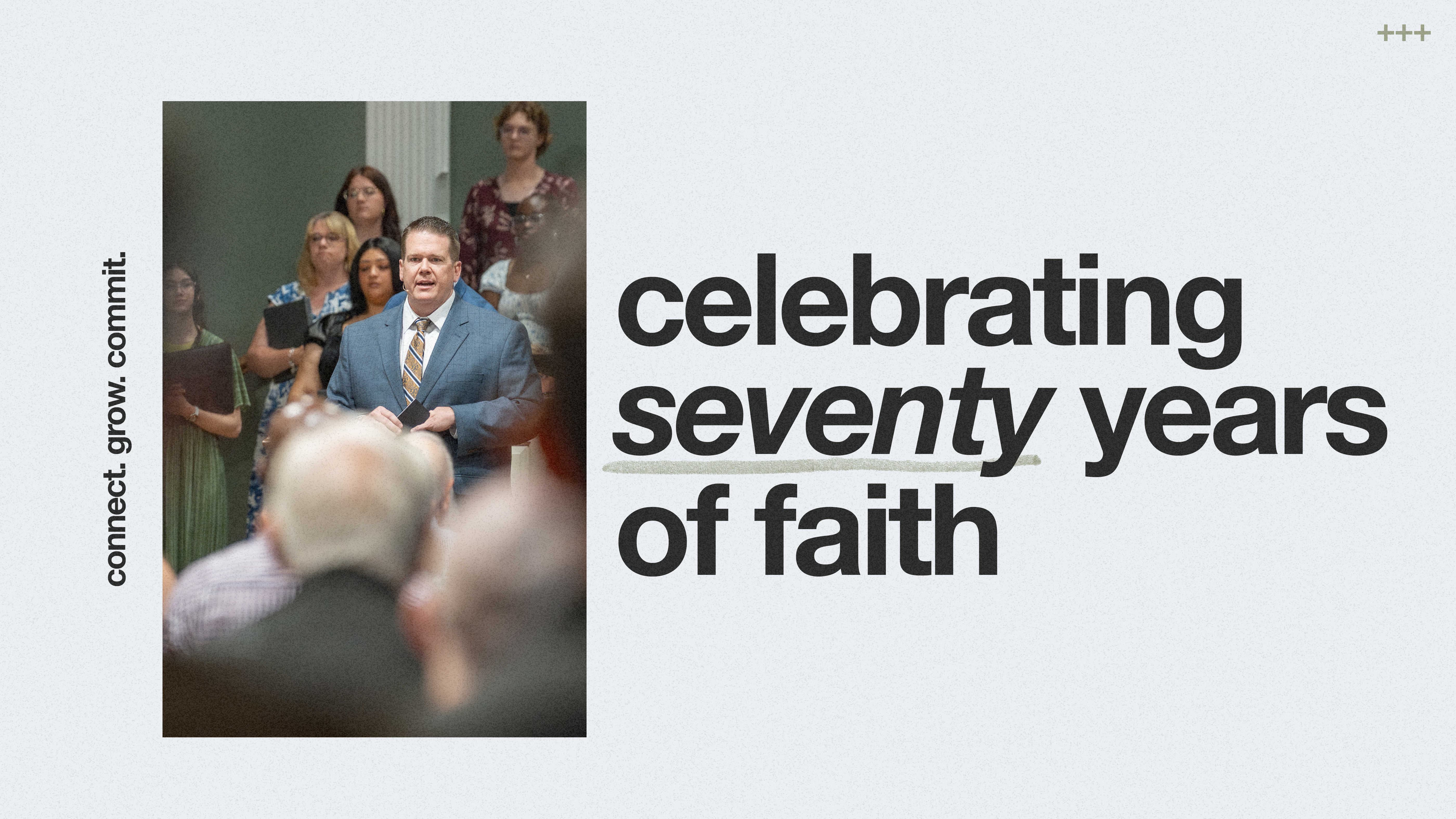
Faith Baptist Church Turns 70!
Come and Celebrate: Faith Baptist Church Turns 70! Psalm 145:4 One generation shall praise thy works to another, and shall declare thy mighty acts. On Sunday, January 3, 2027, Faith Baptist Church will celebrate seventy years of God’s faithfulness. The whole day will be given to honoring the Lord for what He has done in the life of our church and in the countless individuals and families touched by the ministry of His Word. From the beginning, God has commanded His people to teach His truth to their children and to the generations that follow (Deuteronomy 6:7). At Faith, the Lord has blessed us with pastors who faithfully preached the Word and led their own families in it. Honoring Those Who Have Gone Before We are honored that two former pastors, along with their families, have been invited to join us for this celebration: Pastor Paul Fedena, who served Faith Baptist Church from 1971 to 2002 Pastor David Cashman, who served from 2003 to 2014 To show how the Lord’s blessing has passed from one generation to the next, Pastor Andrew Cashman will be our guest preacher for the morning worship service. Schedule for the Day 10:00 AM, Bible Study Hour: We begin with testimonies from people whose lives have been changed through the ministry of Faith Baptist Church. 11:00 AM, Morning Worship Service: Pastor Andrew Cashman brings the message from God’s Word. 5:00 PM, 70th Anniversary Banquet: We close the day remembering, rejoicing, and celebrating the goodness of God together. 70th Anniversary Banquet Join us Sunday evening for a time of good food, fellowship, and thanksgiving to the Lord. Whether you have been part of Faith for seventy years or seventy days, this is a night to share memories and praise God for all He has done. Cost: $15 per person, with a $50 maximum per family. A family includes you, your spouse, and your children under 18.Register your Family Registration and ticket purchase are both done online. Please register by Monday, December 28 so we can prepare for everyone. Questions? Contact the church office at info@fbcfh.com or 215.946.7550. Come and Celebrate We want to celebrate this historic day with everyone who is, or has ever been, part of the Faith Baptist Church family. Over these seventy years, God has used thousands of faithful believers to carry the message of Jesus Christ through our community and around the world. Every pastor, teacher, volunteer, missionary, member, child, teenager, and family is a part of the story God has written here. Whether Faith is your church home today or was an important part of your life in years past, we would love to have you come home and celebrate with us. Faith Baptist Church has always been, and must always remain, a church built upon Jesus Christ and the truth of His Word. As we remember the past, celebrate the present, and look toward the future, our greatest desire is that Jesus Christ would be honored and glorified in everything we do. Join us Sunday, January 3, 2027, as we celebrate seventy years of the faithfulness of God.
November 6, 2026 • 3 Minute Read
Prayer: Our Part in Reaching the World
Matthew 9:37-38 Then saith he unto his disciples, The harvest truly is plenteous, but the labourers are few; Pray ye therefore the Lord of the harvest, that he will send forth labourers into his harvest. The Lord has given the church a work and calling that reaches beyond the walls of any one congregation. Not every believer can cross an ocean, and not every believer can give the same amount. Every believer, however, can pray. Prayer is the one part of reaching the world from which no child of God is excused. Prayer Comes First in the Lord’s Plan When Christ looked upon the multitudes and saw the harvest, His first instruction to His disciples was not to give or to go, but to pray. The sending of laborers begins on the knees of the church. At Antioch, the believers ministered to the Lord and fasted, the Holy Ghost called out Barnabas and Saul, and the church fasted and prayed before sending them away (Acts 13:2-3). The first missionary journey began in a prayer meeting. Prayer Opens Doors Colossians 4:2-3 Continue in prayer, and watch in the same with thanksgiving; Withal praying also for us, that God would open unto us a door of utterance, to speak the mystery of Christ. The apostle Paul, the greatest missionary the church has known, never once presumed he could do without the prayers of the saints. He asked for them again and again. If Paul needed the prayers of the believers, then the missionaries our church supports need them no less. Prayer Holds the Ropes Paul wrote of those “helping together by prayer for us” (2 Corinthians 1:11). The missionary goes down into dark places with the gospel, and the church at home holds the ropes. Every prayer offered faithfully at home becomes part of the work being done on the field. What We Are to Pray That the Lord of the harvest will send forth laborers, including from our own congregation That doors will be opened and that boldness will be given in sharing the gospel (Ephesians 6:19) For the protection, health, and unity of missionary families on the field For those who have never heard the name of Jesus Christ to be reached with the gospel For our own hearts, that we may be willing to go, to give, and to send Putting Prayer into Practice Choose one missionary family and pray for them by name each day this week Read the missionary prayer letters shared through FaithLink, and pray over the requests they contain (Check out October’s Newsletter Here) Pray as a family at the dinner table for the missionaries and the lost of the world Pray before you give, asking the Lord what part He would have you take The Lord has not asked us to do everything. He has asked us to do our part, and our part begins with prayer. 2 Thessalonians 3:1 Finally, brethren, pray for us, that the word of the Lord may have free course, and be glorified, even as it is with you. Learn more about how YOU can be involved in World Missions at Faith Baptist Church.Faith Promise
November 1, 2026 • 6 Minute Read
Faith Promise: Our Part in Reaching the World
Mission Month begins this Sunday. Throughout November, our ministry highlights worldwide missions, and every member is invited to take part through Faith Promise giving. Acts 1:8 But ye shall receive power, after that the Holy Ghost is come upon you: and ye shall be witnesses unto me both in Jerusalem, and in all Judaea, and in Samaria, and unto the uttermost part of the earth. The Assignment Has Not Changed Before His ascension, Christ gave His church a task that reaches beyond Fairless Hills, beyond Pennsylvania, and beyond our own nation. The command to go was never given to a select few. It was given to the church. Matthew 28:19-20 Go ye therefore, and teach all nations, baptizing them in the name of the Father, and of the Son, and of the Holy Ghost: Teaching them to observe all things whatsoever I have commanded you: and, lo, I am with you alway, even unto the end of the world. Amen. Not every believer is called to leave their home and live on a foreign field. However, every believer, has a part in the going. Some go, and others send. Both are essential, and both will share in the reward. Why Missionaries Must Be Sent The apostle Paul reasoned from the need to the solution, one step at a time. Romans 10:14-15 How then shall they call on him in whom they have not believed? and how shall they believe in him of whom they have not heard? and how shall they hear without a preacher? And how shall they preach, except they be sent? Notice the final question: “except they be sent.” A missionary cannot reach a people or plant a church or translate the Scriptures without support. Sending requires prayer, and it also requires faithful giving. Our missionaries depend upon the local church to stand behind them, and Faith Promise is the way we do that together. What Is Faith Promise? Faith Promise is a commitment made between the believer and the Lord. Prayerfully, and by faith, each person decides what God would have him give toward world missions over the coming year, above his regular tithes and offerings. It is a promise made by faith that the Lord will provide the means to keep it. It is above the tithe. Faith Promise does not replace tithes and offerings to the local church. It is an additional gift for the cause of worldwide missions. It is between you and God. No one else determines the amount. It is settled in your heart before the Lord. It is flexible in how it is given. We give weekly, monthly, or as a one-time gift, whichever fits our home. It is for the year. Our annual commitments allow our missionaries and our church to plan with confidence. A Biblical Pattern for Giving The Scriptures do not leave us guessing about how God would have His people give. Paul wrote to the church at Corinth: II Corinthians 9:7 Every man according as he purposeth in his heart, so let him give; not grudgingly, or of necessity: for God loveth a cheerful giver. Giving that honors God is purposed, which means it is thought through and prayed over beforehand. It is also cheerful, not forced. Paul added a word of encouragement for those who feel they have little to offer: II Corinthians 8:12 For if there be first a willing mind, it is accepted according to that a man hath, and not according to that he hath not. God doesn’t measure the gift against someone else’s. He takes note of the willing heart. The widow with little and the businessman with much are both invited to participate. Paul also taught the value of regular, planned giving: I Corinthians 16:2 Upon the first day of the week let every one of you lay by him in store, as God hath prospered him. Whether weekly or monthly, a steady commitment lets the Lord’s work move forward without interruption. A Promise Attached to Giving The church at Philippi partnered with Paul in the gospel again and again, even when no other church did. Concerning their gifts, he wrote: Philippians 4:17 Not because I desire a gift: but I desire fruit that may abound to your account. Then he gave them this assurance: Philippians 4:19 But my God shall supply all your need according to his riches in glory by Christ Jesus. When we give toward missions, souls are saved in foreign countries, and fruit is credited to our account in eternity. The God who is able to save the lost is also able to supply the needs of those who give. Your Next Steps We invite every member of our congregation to take part. Please consider your next steps: Pray. Ask the Lord throughout November what He would have you commit for the coming year. Pray as a household. Husbands and wives, talk and pray together. Parents, include your children and let them see what it means to give by faith. Attend Mission Month. Be present at church this month, and listen as the Lord speaks to our hearts about the world. Pick up a commitment card. Cards are available in the lobby. Take one home and prayerfully complete it. Decide before the Lord. Settle on your commitment and how you will give it, whether weekly, monthly, or one time. Turn in your commitment. Commitments will be received on Sunday morning, November 29. There are people today in places we will never visit who have never once heard the name of Jesus Christ. Some of them are waiting for a missionary who cannot yet go because the support is not there. The Lord has placed us in a position to help. Let us not be found among those who knew the need and did nothing. Romans 10:15 How beautiful are the feet of them that preach the gospel of peace, and bring glad tidings of good things! Let’s pray, purpose in our hearts to give, and send. Stay up to date with Faith Baptist Missionaries Subscribe to our FaithLink Missions Collection. Check out October’s Newsletters!FaithLink Missions
September 7, 2026 • 8 Minute Read
Choose Life
Church family, It is hard to believe that an entire year has passed since we opened our Bibles together and began our journey through the book of Deuteronomy. Week after week, we have stood with the children of Israel on the plains of Moab and listened as Moses prepared a new generation to enter the land God had promised them. When we began this study, my desire was never simply that we would learn more about an Old Testament book. My prayer was that the truths Moses gave Israel thousands of years ago would challenge us to examine our own walk with God today. Throughout our study, we have seen the faithfulness of God, the seriousness of His Word, the consequences of disobedience, and the blessings that accompany a life surrendered to Him. Our theme for this journey has been: A Call to Faithfulness And as we reached the closing chapters of Deuteronomy, one statement seemed to capture the heart of the entire book: Deuteronomy 30:19–20 I call heaven and earth to record this day against you, that I have set before you life and death, blessing and cursing: therefore choose life, that both thou and thy seed may live: That thou mayest love the LORD thy God, and that thou mayest obey his voice, and that thou mayest cleave unto him... Choose life. Those words were spoken to Israel, but the principle behind them speak directly into our lives today. God had been faithful. God had spoken clearly. Now Israel had a decision to make. Would they trust Him? Would they obey Him? Would they follow Him? Would they choose life? Remember What God Has Done Deuteronomy 1–4 Deuteronomy begins with Moses looking backward. Before Israel could move forward into Canaan, Moses wanted them to remember where they had been. He reminded them of God's leading from Mount Sinai. He reminded them of their failure at Kadesh-barnea. He reminded them of the wilderness years. He reminded them of battles won, prayers answered, lessons learned, and the continual faithfulness of God. Some of those memories were wonderful. Others were painful. But all of them were important. One of the dangers facing Israel was that once they entered the land, built houses, planted vineyards, and enjoyed prosperity, they might forget the God who had brought them there. That warning is just as necessary for us. We must never become so accustomed to the blessings of God that we forget the God who gave the blessings. Faith Baptist Church has much to be thankful for. God has answered prayers. He has saved souls. He has changed lives. He has provided for His church. He has led us through difficult seasons and allowed us to experience seasons of tremendous blessing. We must remember. The God who was faithful yesterday is worthy of our trust today. Respond to the Word of God Deuteronomy 5–26 The largest section of Deuteronomy contains Moses' instruction concerning the Law of God. The Ten Commandments are repeated. Israel is instructed concerning worship, family, leadership, justice, giving, relationships, possessions, and everyday life. What becomes obvious throughout these chapters is that God was never interested in simply occupying one portion of their lives. He wanted all of them. One of the great passages of Deuteronomy declares: Deuteronomy 6:4–5 Hear, O Israel: The LORD our God is one LORD: And thou shalt love the LORD thy God with all thine heart, and with all thy soul, and with all thy might. God desired more than outward religious activity. He wanted their hearts. That remains true today. It is possible to attend church, carry a Bible, sing the songs, know the language, and yet allow our hearts to drift away from God. Deuteronomy has reminded us that biblical truth is intended to produce biblical living. God's Word is not simply something we study — it is something we obey. It should affect our homes, our marriages, our parenting, our finances, our relationships, our priorities, our worship, and our decisions. The question is not just, "What does the Bible say?" The next question must always be, "What am I going to do about what God has said?" Recognize That Choices Have Consequences Deuteronomy 27–30 As Israel approached the Promised Land, Moses placed two very different paths before them. There was obedience and disobedience. There was blessing and cursing. There was life and death. God did not hide the consequences from them. Their decisions mattered. That is ultimately what brings us to the great statement of Deuteronomy 30: Therefore choose life. I believe this is one of the greatest lessons we can carry away from our year in Deuteronomy: the direction of our lives is shaped by the choices we make concerning God and His Word. Every generation has to choose. Every family has to choose. Every church has to choose. Every individual has to choose. Israel could appreciate the faith of Moses, but they could not live on Moses' faith. They could remember what their parents had experienced, but they still had to decide whether they would personally follow the Lord. The same is true for us. You cannot live on your parents' faith. You cannot live on your pastor's faith. Our children cannot live on our faith. At some point, every person must determine: I will follow the Lord. That is why Moses' words carry such weight: Choose life. Choose obedience. Choose truth. Choose faithfulness. Choose the Lord. Remain Faithful to the End Deuteronomy 31–34 The final chapters of Deuteronomy bring us to the end of Moses' life. After forty years of leading God's people, Moses prepared Israel for a future without him. Joshua would become their leader. Israel would cross the Jordan. Battles would be fought. The land would be divided. A new chapter in Israel's history was about to begin. Moses gave his final instructions, taught Israel a song, pronounced blessings upon the tribes, and eventually climbed Mount Nebo. From there, God allowed him to see the Promised Land. Then Moses died. There is something moving about reaching the end of Deuteronomy and looking back over the life of this man. Moses was not perfect. Deuteronomy itself reminds us of his failures. Yet his life teaches us something desperately needed today: Faithfulness is not simply beginning well. Faithfulness is continuing with God and finishing well. I want that for my life. I want that for our families. And I want that for Faith Baptist Church. I do not simply want us to have moments of faithfulness. I want us to be a faithful church. Faithful to Scripture. Faithful to the Gospel. Faithful in worship. Faithful in discipleship. Faithful in reaching our community. Faithful in teaching our children. Faithful in supporting missions around the world. Faithful until the Lord returns. Choose Life If I could summarize our entire year in Deuteronomy with one challenge, it would be those two words: Choose life. Every day presents us with opportunities to make that choice. Choose to love God. Choose to obey His Word. Choose faith over fear. Choose holiness over compromise. Choose gratitude over complaining. Choose forgiveness over bitterness. Choose worship over distraction. Choose service over selfishness. Choose truth over the changing opinions of culture. Choose to teach God's Word to your children and your children's children. Choose to remain faithful when following God becomes difficult. And when you fail, choose to get back up and return to the God who has never stopped being faithful. Church family, we have spent a year studying Deuteronomy, but my prayer is that Deuteronomy will continue working in us long after this series has ended. May we remember what God has done. May we respond to what God has said. May we recognize that our choices have consequences. May we remain faithful to the end. And as another generation watches our lives, may they see men and women who did more than talk about faithfulness. May they see a church that lived it. There are many things about tomorrow that we do not know. We do not know every opportunity that will come before Faith Baptist Church. We do not know every trial we will face. We do not know every door God will open or every challenge we will encounter. But we know the God who goes before us. The same God who faithfully led Israel through the wilderness is still faithful today. So as we close the pages of Deuteronomy and continue forward together, I pray that the words of Moses will remain in our hearts: I have set before you life and death, blessing and cursing: therefore choose life. Faith Baptist Church, may that be our decision. May that be the testimony of our homes. May that be the legacy we leave the next generation. Let us choose life. We invite you to watch or listen through the full series at the link below. Called to Faithfulness — Study of DeuteronomyHe Loved the People
August 24, 2026 • 2 Minute Read
Trusting God on Unfamiliar Ground
Good afternoon Church Family, I wanted to take a moment to strongly encourage you to set aside some time this week to listen to Sunday evening’s message delivered by Pastor Will Duttry. Brother Duttry took us to the book of Joshua and the account of the children of Israel preparing to cross the Jordan River, emphasizing the powerful truth, “Ye have not passed this way heretofore.” There are seasons in life when God leads us down a path we have never walked before, and we must learn to trust His presence, His direction, and His faithfulness. God used this message in a special way in the lives of those who were in attendance Sunday evening, and I believe you will find an opportunity for spiritual growth in your own life as you listen and apply these truths. Brother Duttry was also very open and honest with us about the trials his family is currently walking through and how God is sustaining, strengthening, and leading them through a way they have not passed before. I encourage you to listen with an open Bible and an open heart, asking the Lord how these truths apply to the path He has you walking today. May we continue to grow together—not only through what is preached from the pulpit, but through the truths we carry with us beyond the pulpit. Pastor Chad You can listen to the sermon here:We Have Not Passed this Way Before
August 5, 2026 • 3 Minute Read
The Answer for a Discouraged Soul
Last Sunday evening, we began walking through Psalm 42 and considered the subject “Thirst for God.” The Psalmist described his longing for God with these familiar words: “As the hart panteth after the water brooks, so panteth my soul after thee, O God.” We were reminded that the greatest evidence of spiritual health is not that we believe in God, but that we continually desire God. The Psalmist did not just want relief from his circumstances. More than anything else, he wanted renewed fellowship with the Living God! Tonight, we will return to Psalm 42 and continue into Psalm 43 as we consider the subject “The Answer for a Discouraged Soul.” Although the Psalmist genuinely thirsted for God, he was also deeply discouraged. He was separated from the house of God, overwhelmed by sorrow, mocked by his enemies and struggling with what appeared to be the silence of God. Again and again, he asked himself: “Why art thou cast down, O my soul? and why art thou disquieted within me?” But he did not allow discouragement to have the final word. He answered his troubled soul with this declaration: “Hope thou in God: for I shall yet praise him.” That repeated statement forms the heart of tonight’s message. Biblical hope is not pretending that everything is fine. It is not ignoring pain, denying sorrow or refusing to admit that we are struggling. Biblical hope is the confident expectation that, even when our soul is cast down and God seems far away, He is still faithful and we must praise Him. The Psalmist teaches us that we do not have to just listen to our discouraged hearts. We can speak truth to them. We can remember God in the middle of the storm. We can bring our hardest questions to Him. We can ask Him to send out His Light and Truth. And we can trust that the God who sees our discouragement is still able to lift our soul. You may be walking through a difficult season tonight. Your soul may feel heavy. Your prayers may seem unanswered. You may know what the Bible says while still struggling with what you feel. Psalm 42 and Psalm 43 give us a message for moments like these: You may be cast down, but you have not been cast away. You may feel overwhelmed, but you are not outside the reach of God’s lovingkindness. You may be walking through the night, but morning is coming. You may not understand the road, but His light and truth will lead you. Come prepared tonight with your Bible open to Psalm 42 and Psalm 43. My prayer is that God will strengthen discouraged hearts and teach each of us to say with confidence: “Hope in God: for I shall yet praise him, who is the health of my countenance, and my God.” Can't make it tonight? Watch Live HERE!The Answer for a Discouraged Soul
July 21, 2026 • 6 Minute Read
No Other Gospel: A Study of Galatians
As I have studied and preached through Galatians, the Lord has done a work in my own heart. One of the truths that has encouraged and challenged me most is Paul’s statement: Galatians 6:14 But God forbid that I should glory, save in the cross of our Lord Jesus Christ, by whom the world is crucified unto me, and I unto the world. Paul was saying that because of the cross, his relationship with the world had completely changed. The world and its system had lost their appeal to Paul, and Paul was no longer considered anything of value by the world. Paul found something greater, the cross of Jesus Christ. This was not a new truth for Paul. Earlier in Galatians, he wrote: Galatians 2:20 I am crucified with Christ: nevertheless I live; yet not I, but Christ liveth in me. Paul understood that the cross was not just the place where Jesus died for him; it had become the defining reality of his entire life. His old identity, ambitions, righteousness, and confidence had been crucified with Christ. He was no longer living to establish his own worth. Christ was now living through him. That truth has caused me to examine my own heart. What still holds too much appeal for me? Whose approval am I seeking? In what accomplishments am I tempted to glory? Do I find my identity in what I have done, what I possess, what others think of me, or in what Jesus Christ accomplished upon the cross? The Gospel does not just bring us to the cross for salvation and then allow us to move on to something else. We begin at the cross, we live under the shadow of the cross, and we will glory in the cross for all eternity. There is no other Gospel, and there can be no other object of our glory than Jesus Christ and His finished work. Individual Sermon Summaries The series includes the following fifteen messages: 1) When the Gospel is at Stake — Galatians 1:1–10 We open this series by uncovering the urgency behind Paul's letter to the Galatians. Paul confronts a dangerous distortion of the true gospel that had taken root in the churches of Galatia, and this message sets the stakes for the entire study: when the gospel is altered, everything is lost. 2) Called into Grace — Galatians 1:1–10 Returning to the same passage in the evening service, this message focuses on Paul's warning to a young church drifting from the gospel that had called them. Though the Galatians had received grace, they were tempted to abandon it, and Paul's astonishment becomes the church's own caution. 3) The Power that Changes Everything — Galatians 1:10–16 This message examines the testimony of the Apostle Paul, whose radical conversion stands as undeniable proof that the gospel of Jesus Christ does not merely improve a life—it transforms it entirely, from the inside out. 4) Only the Gospel — Galatians 1 (focus verse 1:24) Continuing through Paul's early testimony, this message shows that only the gospel of Jesus Christ has the power to truly and radically change a life, as those who once persecuted the faith glorified God in Paul because of him. 5) Living What We Say We Believe — Galatians 2:11–21 Paul's public confrontation of Peter at Antioch exposes the gap that can form between what believers profess and how they actually live. This message challenges the church to close that gap, holding fast to the truth that salvation is by grace alone, through faith alone. 6) Who is Living Your Life — Galatians 2:16–21 Building on Paul's confrontation of Peter, this message moves believers beyond simply knowing the gospel to truly living it, anchored in Paul's declaration: "I am crucified with Christ: nevertheless I live; yet not I, but Christ liveth in me." 7) The Danger of Spiritual Self Reliance — Galatians 3:1–9 Paul confronts the Galatians' drift toward self-effort, reminding them—and the church today—that the Christian life begins, continues, and grows by grace through faith, never by human striving. 8) Redeemed and Adopted — Galatians 4 Paul reminds believers of the fullness of the gospel: through Jesus Christ, believers are not only redeemed from the bondage of sin and the law, but adopted into the family of God as sons and heirs. 9) Don't Go Back — Galatians 4:8–11 Paul issues a passionate warning to believers tempted to return to spiritual bondage after tasting the freedom found in Christ. Having been set free, the church is called never to look back. 10) Until Christ be Formed in You — Galatians 4 (focus verse 4:19) Paul's travail for the Galatian believers reveals that the gospel does far more than save from judgment—it transforms believers into the likeness of Christ. This message calls the church to ongoing spiritual formation, not mere profession. 11) Free to Serve — Galatians 5:1–15 The freedom Christ purchased was never meant to become an excuse for self-centered living. This message shows that true Christian liberty is found in loving and serving others, not indulging the flesh. 12) The War Within — Galatians 5:16–21 The greatest battle every Christian faces is not one found in the headlines, but the war raging within the heart. Paul reveals the constant conflict between the flesh and the Spirit that marks the believer's daily walk. 13) Evidence of True Freedom — Galatians 5:16–26 What does true freedom in Christ actually look like? This message shows that the Christian life is not about trying harder or merely avoiding sin—it is about Christ living His life through the believer, evidenced by the fruit of the Spirit. 14) Restoring Grace — Galatians 6:1–10 Paul reminds the church that a Spirit-filled congregation is not made up of perfect people, but of believers who lovingly restore one another in a spirit of meekness, bearing one another's burdens. 15) No Other Glory — Galatians 6:11–18 In Paul's closing words, the series reaches its conclusion: there is no other glory than the cross of Jesus Christ. As Paul contrasts empty religion with true faith, the church is reminded one final time that no other gospel—and no other glory—will do. From beginning to end, Galatians reminds the church that the gospel is not to be added to, altered, or abandoned. It stands alone as the power of God unto salvation, and it alone sets the believer free to walk in the Spirit, free to serve, free to restore one another in grace, and free to glory in nothing but the cross. We invite you to watch or listen through the full series at the link below. No Other Gospel — Study of GalatiansWhen the Gospel is at Stake
June 24, 2026 • 5 Minute Read
Marked Pages: More Than an Offering Plate
I have recently been reading material to help me get a better grasp on what biblical giving looks like in modern economic times. When I read the Old Testament, I find God's people bringing offerings that often look very different from what we see today. They brought grain offerings, firstfruits, livestock, produce from their fields, and various other sacrifices. Their giving reflected the way they earned a living and the resources God had entrusted to them. That raises an interesting question: What does biblical stewardship look like in today's world? As I studied this subject, I came across a resource that identified three primary "pockets" from which believers give today. The concept challenged me because most Christians are familiar with one of these pockets but rarely consider the other two. I wanted to pass this thought along because it is something worth contemplating, praying about, and engaging in as faithful stewards of God's blessings. The principle is simple: everything God entrusts to us is meant to be stewarded for His glory. Psalm 24:1 The earth is the Lord's, and the fulness thereof; the world, and they that dwell therein. We are not owners. We are stewards. God blesses His children not merely so they can possess resources, but so they can manage those resources in a way that honors Him. The purpose of blessing is that it is stewarded by God's children for His glory. 1) The Earned Income Pocket This is the pocket most of us immediately think about when the subject of giving arises. Earned income is the money we receive through our labor—our paycheck, salary, wages, commissions, or business income. For many believers, faithful stewardship begins here. As God provides through our work, we return a portion to Him through regular, cheerful, and sacrificial giving. When we place an offering in the plate, support missions, or give toward a ministry need, we are often giving from our earned income pocket. This type of giving is important, biblical, and should be practiced consistently. Yet it is only one aspect of stewardship. 2) The Capital Pocket The capital pocket includes assets that have accumulated over time. These may include savings accounts, investments, stocks, retirement funds, real estate, land, business interests, valuable collections, or other resources God has entrusted to us. Many believers carefully consider giving from their income while never considering how God might use their accumulated assets. Throughout Scripture, God's people gave not only from what they earned, but also from what they possessed. There are seasons when God may lead a believer to use a portion of their savings to advance a ministry project, support a missionary, assist a family in need, or invest in a kingdom opportunity. The question becomes: Are our assets serving God's purposes, or are they simply sitting idle? The capital pocket reminds us that stewardship extends beyond our weekly paycheck. 3) The Estate Pocket The estate pocket concerns what happens to our resources after we enter eternity. Every believer will one day leave behind possessions, property, investments, and accumulated wealth. Most people spend considerable time planning how those assets will be distributed among family members. Yet few consider how their final act of stewardship can impact the work of God. One statement I encountered that every believer should consider including in their will is this: "After all my bills are paid, I want 10 percent of my estate (a tithe) to go to ______ Church." What a powerful testimony of stewardship. Estate giving is not about neglecting family responsibilities. Rather, it is recognizing that everything belongs to God and intentionally including His work in our final plans. For some believers, this may involve leaving a percentage of their estate to their local church. For others, it may include missionaries, Christian schools, camps, or ministries that have played a significant role in their spiritual lives. Estate planning allows us to continue investing in God's work even after we have gone home to be with the Lord. A Stewardship Mindset When most people hear a message about giving, they immediately think about what is in their wallet or checking account. Yet biblical stewardship is much broader than that. God has entrusted us with income. God has entrusted us with assets. God has entrusted us with an estate. Each of these represents an opportunity to honor Him. The goal is not simply to give more. The goal is to recognize that everything belongs to God and to ask, Lord, how would You have me steward what You have entrusted to me? Whether from our earned income, our accumulated capital, or our eventual estate, every gift becomes an opportunity to invest in something that will outlast this world. After all, we cannot take any of it with us—but we can use it now and direct it wisely so that it continues to bring glory to God long after we are gone. These are simply a few thoughts from my recent reading. I am thankful to be part of a church that is sensitive to the Lord and gives in a way that honors Him. God Bless, Pastor Braley Highlighted Reading: Not Your Parent’s Offering Plate by Cliff Christopher & Mike Slaughter As with any book outside of Scripture, Pastor Braley does not endorse every view or conclusion the author presents. The Bible alone is our final and infallible authority — Scripture alone holds that distinction.