

Search
Recent Posts

October 1, 2026 • 8 Minute Read
Called to Serve: Assistant Pastors
Exodus 17:8-13; 24:13; 33:11; Numbers 27:18-23 Scripture gives us no single verse that defines the office of assistant pastor the way it defines the senior pastor or the deacon. Instead, God gives us something instructive, the lives of men who served faithfully alongside another. In the life of Moses, we find two pictures: Aaron and Hur, who held up his hands in battle, and Joshua, who was quietly shaped for leadership over many years. Together, they show us the two halves of this calling, sustaining the man God has placed over you, and being shaped by God in the process. Aaron & Hur: Holding Up the Hands Israel was under attack by Amalek at Rephidim. Moses sent Joshua down into the fight, while he himself climbed a hill overlooking the battle, staff in hand. Exodus 17:11
And it came to pass, when Moses held up his hand, that Israel prevailed: and when he let down his hand, Amalek prevailed As long as Moses' hands stayed lifted, Israel had the victory. But Moses was a man, and even a godly man's arms become heavy. Exodus 17:12
But Moses' hands were heavy; and they took a stone, and put it under him, and he sat thereon; and Aaron and Hur stayed up his hands, the one on the one side, and the other on the other side; and his hands were steady until the going down of the sun. What Aaron and Hur Teach Us 1) They held him up, they did not take his place.
Aaron and Hur never reached for the staff. They did not step in to lead the battle or claim any credit for what God did that day. Their whole contribution was simply to keep Moses steady. This is the heart of what an assistant pastor does, he strengthens the man God has placed over him; he does not compete with him. 2) They noticed before they were asked.
Nobody had to tell Aaron and Hur that Moses was struggling. They saw his hands growing heavy, and they acted. Much of faithful ministry is simply paying close enough attention to notice when your leader is growing weary, and stepping in before they ever have to ask. 3) Their work was not glamorous, but it mattered.
No sermon was preached from that hilltop. No miracle was performed by Aaron or Hur. They simply held up arms until the sun went down. So much of this kind of ministry looks exactly like that - quiet, repetitive, tiring, and unnoticed by anyone watching from a distance. But without it, the battle would have been lost. 4) Their faithfulness on the hill won the battle in the valley.
“And Joshua discomfited Amalek and his people with the edge of the sword” (Exodus 17:13). The fighting happened below, but the outcome was decided above, by men who refused to let tired arms decide the day. When those who assist a pastor stay faithful in quiet, unseen ways, the whole church benefits, even those who never once look up at the hill. This picture is not an isolated exception, it is a pattern God builds into how His people are meant to carry burdens. Ecclesiastes 4:9-10
Two are better than one; because they have a good reward for their labour. For if they fall, the one will lift up his fellow: but woe to him that is alone when he falleth; for he hath not another to help him up. And Paul commands the church at Galatia in words that could have been written about that very hillside: Galatians 6:2
Bear ye one another's burdens, and so fulfil the law of Christ. Assistant pastors live this out at the leadership level, but this is not only a pattern for pastors, it is a pattern for the whole church family. Someone near you is carrying heavy arms today. Joshua: The Minister Who Was Being Made Ready Long before Joshua ever led Israel into the promised land, his name shows up quietly, again and again, beside Moses. Scripture gives him a title easy to skim past, but worth considering - he is called Moses' “minister.” Exodus 24:13
And Moses rose up, and his minister Joshua: and Moses went up into the mount of God. One of the most telling verses about Joshua has nothing to do with leadership at all: Exodus 33:11
And the LORD spake unto Moses face to face, as a man speaketh unto his friend. And he turned again into the camp: but his servant Joshua, the son of Nun, a young man, departed not out of the tabernacle. Moses would meet with God and then return to the camp, but Joshua remained behind, alone, in the tabernacle. No one was watching. No assignment required it of him. He simply stayed in the presence of God because he loved being there. This is the kind of hidden faithfulness that shapes a man's heart long before God ever hands him something public to lead. What Joshua's Life Teaches Us 1) He was being shaped, not just used.
Those years beside Moses were not only about getting things done. They were formation. God was quietly building within Joshua the character and dependence on God he would need decades later. If you are serving alongside leadership right now, this season is not wasted. Whether or not you are ever asked to lead publicly, God is building something in you that you will need later, even if you cannot see it yet. 2) Nearness to God matters more than nearness to the platform.
Joshua's greatest qualification was not his skill in battle, it was that he lingered in the tabernacle. Time spent in prayer and in the Word, when no one is watching or applauding, is what makes public ministry bear fruit that lasts. 3) God's timing, not personal ambition, moved him forward.
When it finally came time for Joshua to lead, it did not happen because he pushed for it: Numbers 27:18, 23
And the LORD said unto Moses, Take thee Joshua the son of Nun, a man in whom is the spirit, and lay thine hand upon him... And he laid his hands upon him, and gave him a charge, as the LORD commanded by the hand of Moses. The Lord directed it. Moses commissioned it publicly, before the whole congregation. And the people recognized it. Joshua never appointed himself, and he never campaigned for the role. This remains the pattern God honors today, leadership that comes through divine calling, not simply ambition. 4) Small, hidden faithfulness always comes first.
Joshua served quietly beside Moses for roughly forty years before he ever led Israel across the Jordan. There is no shortcut in Scripture. God is patient, and He proves men in the small places long before He entrusts them with the large ones. When Moses finally laid his hands on Joshua, Scripture tells us exactly what resulted: Deuteronomy 34:9
And Joshua the son of Nun was full of the spirit of wisdom; for Moses had laid his hands upon him: and the children of Israel hearkened unto him, and did as the LORD commanded Moses. This wisdom did not appear in Joshua overnight, it was the fruit of years spent near Moses, watching him pray, watching him lead, watching him fail and repent and trust God again. This is exactly the pattern Paul later instructs Timothy to continue: 2 Timothy 2:2
And the things that thou hast heard of me among many witnesses, the same commit thou to faithful men, who shall be able to teach others also. Faithful men, teaching faithful men, who go on to teach others. This is not a modern leadership strategy, it is simply how God has always grown His church, one faithful life poured into another. A Challenge for All of Us Jesus captured what made Joshua ready long before Israel ever knew his name: Luke 16:10
He that is faithful in that which is least is faithful also in much: and he that is unjust in the least is unjust also in much. An assistant pastor's calling holds both of these truths together. Like Aaron and Hur, he is called to sustain, to notice weariness, to hold up tired hands, and to strengthen the man God has placed over him without ever seeking to replace him. And like Joshua, he is called to be shaped, to remain faithful in hidden, unseen places, trusting that God is building something in him for a purpose only the Lord fully sees. If you are serving in a supporting role right now, in pastoral ministry or anywhere else in this church, don’t be discouraged in the tent or weary in holding up the hands of another. The Lord is not wasting this season. Every one of you who serves faithfully where no one is watching is needed. Next in this series: How These Offices Work Together Available Thursday, October 8, 2026.


September 29, 2026 • 2 Minute Read
Faith Teens October Newsletter
Dear Parents, This past month, we had the opportunity to take our 10th–12th graders to a Youth Rally in Newington, CT. Throughout the weekend, our teens were challenged from Matthew 7 to consider what they are searching for and where they are looking to find it. It was a great opportunity to spend time with this group, invest in them, and challenge them in their walk with God. We were also encouraged to see our teens take part in Friend Day. Multiple teens invited and brought their friends to church. It was great to see our teens wanting to invite their friends to church. We are praying for God to build our Youth Ministry. As we look ahead to this upcoming month, we are excited to have a special activity planned for our 7th–9th graders. We will be taking them to Camp Calvary for a night of harvest-themed activities, including a corn maze, hayride, games, s’mores, and a bonfire. Upcoming Schedule Harvest Fest- October 2nd (Hosted by Camp Calvary) 7th–9th graders are invited to join us for the Harvest Fest hosted by Camp Calvary, on October 2. We'll leave the church at 5:00 PM and return by Midnight. The cost is $15.SIGN-UP HERE Scarf & Barf- October 18th All 7th–12th graders are invited to join us for Scarf & Barf, a fast-food scavenger hunt designed to bring our teens together for a fun and competitive night. Throughout the evening, teens will have to figure out the correct food item at each restaurant and race to finish it. It will be a fun night of competition, teamwork, and fun with their youth group. Since this event falls on a school night, we will start promptly at 6:30 PM and finish at 8:30 PM. We want our students to enjoy some time together while still getting home at a reasonable time to prepare for the school week ahead. Cost: $10. Have Questions? Contact Bro. Nick Brunoni
Cell #: 267.969.0156 - Email: nbrunoni@fbcfh.com


September 24, 2026 • 4 Minute Read
Called to Serve: The Deacons
The word “deacon” simply means servant, and that tells us a lot about the office before we read another verse. Our deacons are not just a governing board, and they are not a junior version of the pastorate. They are godly, spiritually qualified men, set apart to care for the real, practical needs of this church family, so your pastor can remain devoted to prayer and the ministry of the Word on your behalf. Where This Calling Began The office of deacon grew out of a real problem in the early church. Widows were being overlooked in the daily distribution of food, and it grieved the congregation. Here is how the apostles responded: Acts 6:2-4
Then the twelve called the multitude of the disciples unto them, and said, It is not reason that we should leave the word of God, and serve tables... Wherefore, brethren, look ye out among you seven men of honest report, full of the Holy Ghost and wisdom, whom we may appoint over this business. But we will give ourselves continually to prayer, and to the ministry of the word. The apostles did not consider the physical needs of the widows unimportant, they considered those needs important enough to entrust to godly, Spirit-filled men, so they would be cared for well. And the result was remarkable: Acts 6:7
And the word of God increased; and the number of the disciples multiplied in Jerusalem greatly. When deacons serve faithfully, the preaching of God's Word goes forward unhindered. These two callings were never meant to compete with each other. They were designed to free each other for exactly what each was made to do. Godly Men, Not Just Willing Hands Paul lays out real qualifications for deacons in 1 Timothy 3:8-13, sober men, not double-tongued, not given to much wine, not greedy, holding the mystery of the faith in a pure conscience, tested and found blameless, faithful husbands who lead their homes well. Our deacons are not simply the men who happen to be available or willing to work, they are men whose character has already been proven. The trust placed in them is spiritual before it is ever practical. What Deacon Ministry Looks Like Caring for our members' physical needs, especially during illness, grief, or hardship Helping carry the practical, everyday operation of the church so your pastor is free for prayer and the Word Living as examples of godly character and faithful households within our congregation Standing ready to quietly meet needs as they become known, often without ever being asked Guarding the peace and unity of this church family alongside pastoral leadership The Example Christ Himself Set If our deacons ever wonder whether their service is truly significant, they need only remember whose example they are following. Jesus told His disciples plainly what greatness looks like in His kingdom: Matthew 20:26-28
But whosoever will be great among you, let him be your minister; And whosoever will be chief among you, let him be your servant: Even as the Son of man came not to be ministered unto, but to minister, and to give his life a ransom for many. Our Lord washed feet. He served in like manner long before He ever commissioned seven men to serve tables in Jerusalem. When a deacon serves quietly and without recognition, he is not doing lesser work, he is walking in the footsteps of Christ. Paul promises that this service is never wasted, even when no one else notices it: 1 Timothy 3:13
For they that have used the office of a deacon well purchase to themselves a good degree, and great boldness in the faith which is in Christ Jesus. Faithful service in this office does not go unnoticed by God, even on the days it goes unnoticed by everyone else. Why This Matters to You If a meal has ever appeared at your door during a hospital stay, if someone has ever quietly checked on you during a hard season, or helped you with something you did not even have to ask twice for, you have likely already seen deacon ministry at work. It is often hidden, but it is no less precious to this church family. Our deacons free your pastor to feed and watch the flock, and in doing so, they serve every one of us.Learn more about our current Deacons Next in this series: Assistant PastorsAssistant Pastors

September 22, 2026 • 3 Minute Read
Your Average Sunday, May Be Someone’s Breakthrough
For those who serve faithfully week after week, or fill the same seat and greet the same familiar faces, a Sunday can begin to feel routine. The order of service becomes familiar. The rhythm is comfortable. It can become simply another Sunday. But not everyone who walks through those doors is carrying that same level of comfort. For some, coming this Sunday will be a breakthrough. The one who hasn’t come through a church door in years, finally walking back in. The one who has never once heard the gospel clearly, hearing it for the first time. The wanderer, sick of running, finally coming home. For others, this Sunday is a victory of obedience. The believer who has struggled to be faithful, choosing to show up anyway. The one who has wrestled with sin, coming forward at last to lay it at the altar. The quiet person who has known for weeks they needed to be baptized, or join in membership, or serve, and this week finally said yes to the Lord. None of these moments look dramatic from the outside. No one else in the room may even notice. But heaven takes notice. Consider the words of the Christ: Luke 15:10, Likewise, I say unto you, there is joy in the presence of the angels of God over one sinner that repenteth. And consider the father who ran to meet his returning son: Luke 15:20, But when he was yet a great way off, his father saw him, and had compassion, and ran, and fell on his neck, and kissed him. What looks ordinary to us may be the very moment God has been working toward for years in someone else's heart. A Few Ways to Watch for the Breakthrough Around You Look for the unfamiliar face. A warm greeting may be the very thing that confirms they made the right choice in coming. Recognize the quiet victories. Not every breakthrough is loud. Sometimes it is simply someone choosing faithfulness over comfort, one more week. Do not let familiarity dull your gratitude. Ask the Lord to give you fresh eyes for what He is doing, even on an "ordinary" Sunday. Be ready to encourage the step of obedience. A brief word after the service may be exactly what someone needs to keep walking forward. A Few Things to Guard Against Do not assume you know someone's story. A quiet face or an awkward greeting may be masking real courage. Give grace before you form an opinion. Do not let cliques close the door on a newcomer. Familiar friendships are a blessing, but they can unintentionally exclude the very person who needed to be welcomed. Do not treat a visitor's presence as an opportunity to "sell" the church. Genuine care is felt. A performance is also felt. Do not make a big return or a first-time step feel like a spectacle. Some breakthroughs need quiet encouragement, not a spotlight. Do not assume someone will come back next week. Follow up. Many who leave without a kind word or a next step simply do not return. Every Sunday carries the potential to be someone's breakthrough and someone's victory of obedience. May we never grow so accustomed to gathering together that we miss what the Lord is doing in the hearts around us.
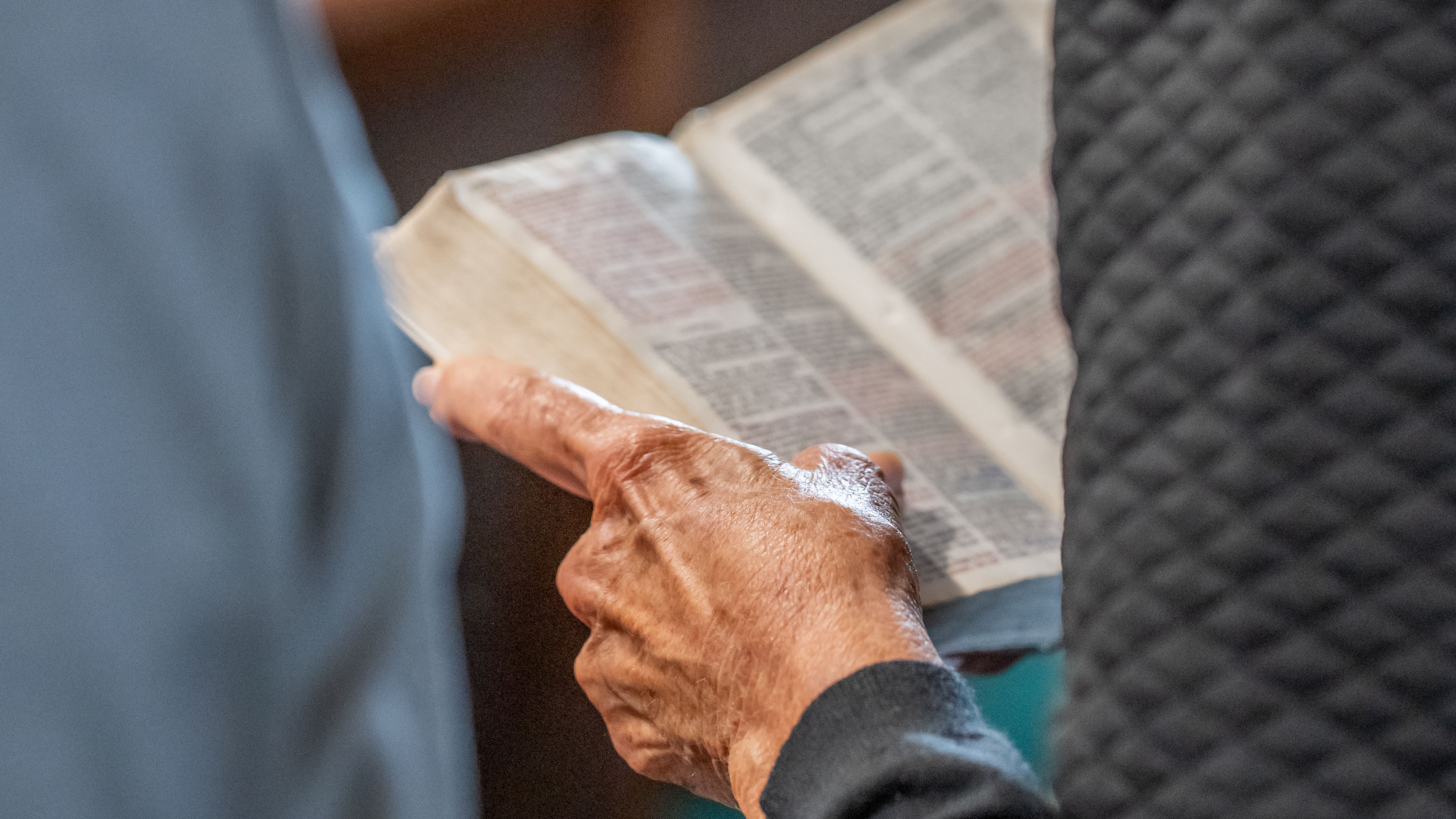
September 17, 2026 • 5 Minute Read
Called to Serve: The Senior Pastor
Every church family looks to one man to carry the final weight of pastoral care, the senior pastor. This is not a position of convenience. It is a holy calling, and Scripture describes it in language that humbles the man who carries it and ought to deepen your love for him. Called to Feed and Watch When Paul left the elders at Ephesus, he gave them words that still define this calling today: Acts 20:28
Take heed therefore unto yourselves, and to all the flock, over the which the Holy Ghost hath made you overseers, to feed the church of God, which he hath purchased with his own blood. Feed and watch - this is the heart of the calling. A pastor feeds you through faithful, grounded preaching and teaching, week after week, so you are never left spiritually hungry. And he watches, aware of dangers you may not see, aware of the sheep who are struggling or straying, aware that every person sitting in that pew was purchased with the blood of Christ Himself. This is not a small thing to carry. Called to Give Account Peter, writing to fellow elders, describes this calling as both a privilege and a weight: 1 Peter 5:2-3
Feed the flock of God which is among you, taking the oversight thereof, not by constraint, but willingly; not for filthy lucre, but of a ready mind; Neither as being lords over God's heritage, but being ensamples to the flock. A true pastor never treats the flock as something he owns, the flock belongs to God. He leads by going first, not by just demanding others follow. And the writer of Hebrews adds a truth that ought to move us to pray earnestly for the men who shepherd us: Hebrews 13:17
They watch for your souls, as they that must give account. One day, your senior pastor will stand before God and give an account for how he cared for you. That is the weight behind every sermon prepared, every hospital room visited, and every hard conversation had in love, because he must care more about your soul than your comfort. A Calling Rooted in Love, Not Duty Before Jesus ever gave Peter a flock to feed, He asked him a question three times, and the order is worth noting: John 21:15
So when they had dined, Jesus saith to Simon Peter, Simon, son of Jonas, lovest thou me more than these? He saith unto him, Yea, Lord; thou knowest that I love thee. He saith unto him, Feed my lambs. Jesus did not ask Peter whether he was capable, trained, or confident. He asked whether Peter loved Him. Every faithful pastor's ministry flows from that same source, not duty first, but love for Christ first, and only then a love for His sheep that is willing to feed them, tend them, and feed them again (John 21:15-17). This is what truly qualifies a man to shepherd you. Paul calls this desire itself a good thing, not something to be ashamed of: 1 Timothy 3:1
This is a true saying, If a man desire the office of a bishop, he desireth a good work. It is good work, hard, humbling, and good. And it is work Paul says deserves our honor: 1 Timothy 5:17
Let the elders that rule well be counted worthy of double honour, especially they who labour in the word and doctrine. A Man Who Is Tested, Not Just Willing God does not leave the qualifications for this calling unclear. 1 Timothy 3:1-7 and Titus 1:5-9 lay them out in detail, a blameless life, sound doctrine, a well-ordered home, a good reputation even among those outside the church. This office is not granted because a man wants it or is willing to do it. It is granted to a man whose life and doctrine have been tested and found faithful, and whom the church itself recognizes and affirms. James reminds us why this bar is set so high: James 3:1
My brethren, be not many masters, knowing that we shall receive the greater condemnation. Teaching God's people carries a weightier judgment, not a lighter one. Your pastor does not step into a pulpit lightly, and he should not. Every time he opens the Word to you, he is aware that he will answer to God for what he says and how he lives. Why We Follow Gladly Submission to your pastor should never be seen as something forced or reluctant. Scripture calls us to follow willingly, because he watches for our souls and will answer to God for how he shepherded us. That is not a burden, it is a gift. Take a moment this week to thank the Lord for the pastor He has given you, and pray that God would strengthen him for the weight he carries on your behalf. Next in this series: The DeaconsCalled to Serve: The Deacons

September 13, 2026 • 2 Minute Read
Grandparents Day at Faith Baptist
Some gifts skip a generation. Others are meant to be passed down. On Sunday, September 13, 2026, our whole church family will pause together to give thanks for one of God's most precious gifts, the heritage of faith carried from one generation to the next. The Psalmist wrote, "One generation shall praise thy works to another, and shall declare thy mighty acts" (Psalm 145:4). That is the heartbeat of Grandparents Day at Faith Baptist. Faith is not meant to end with us. It is meant to be spoken, modeled, and handed down. Scripture reminds us how important it is: Proverbs 17:6
Children's children are the crown of old men; and the glory of children are their fathers. 2 Timothy 1:5
I call to remembrance the unfeigned faith that is in thee, which dwelt first in thy grandmother Lois, and thy mother Eunice; and I am persuaded that in thee also. Timothy's faith did not begin with him. It was planted by a grandmother, watered by a mother, and it grew into a life the Lord used greatly. That same kind of legacy is being written in homes across our church family right now, whether through a grandparent who walked faithfully before you, or grandchildren who remind you why it all matters. Weren’t able to make it? On Grandparents Sunday, we were reminded that every generation leaves something behind for the generation that follows—but the greatest inheritance we can give is not wealth, possessions, or earthly success, but a genuine faith in God. From Deuteronomy 6:1–12, we learn that generations must remember God, repeat His truth, reflect His truth in daily life, and guard against forgetting Him when His blessings bring comfort and prosperity. Our faith cannot simply be “Grandpa’s religion” or “Mom and Dad’s convictions”; it must be personally known, faithfully lived, and intentionally passed to those coming behind us. As we consider what we are leaving behind, may we remember what God has done, live according to His Word, and diligently teach the next generation to know and follow Him.Generations that Remember God


Copyright Faith Baptist Church 2026